
Patching Jeans Step by Step: A Clear DIY Repair Tutorial
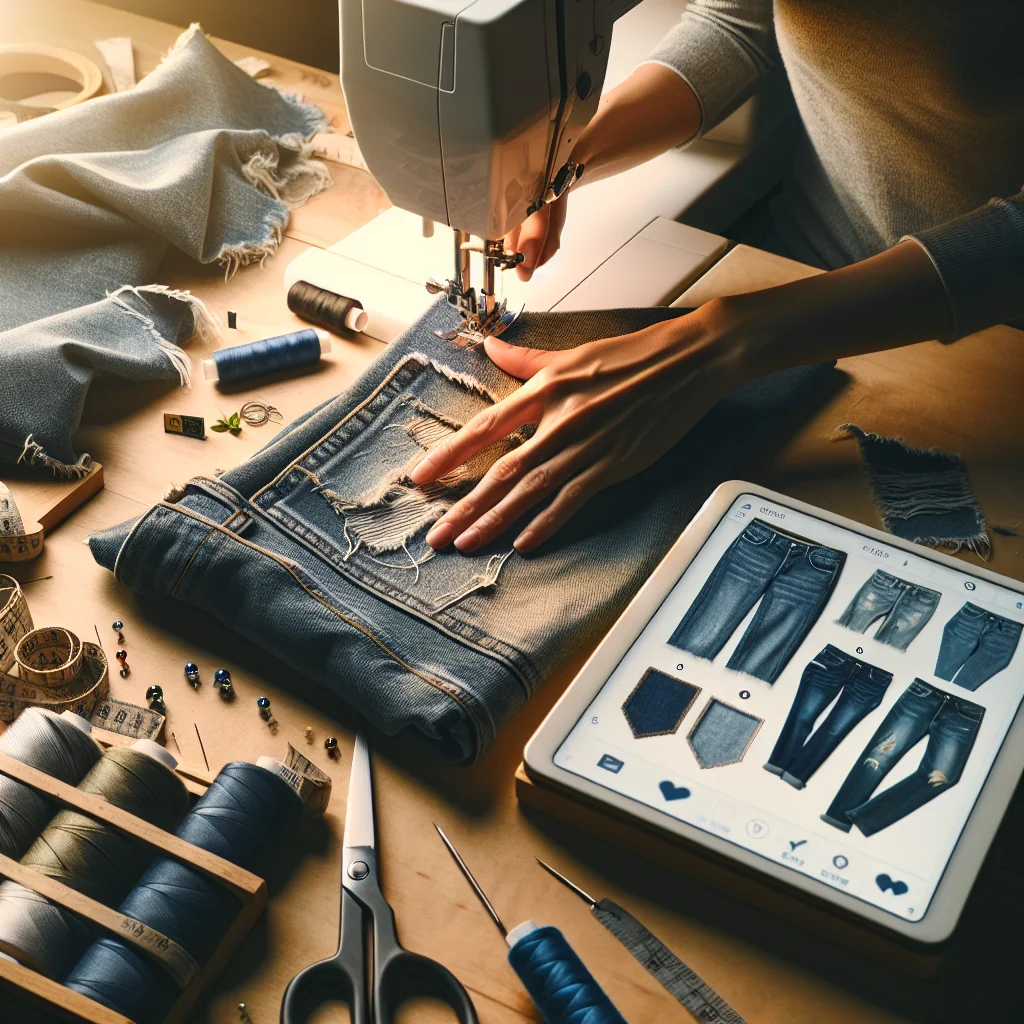
Patching jeans step by step is a simple skill that saves money and keeps favorite clothes in use. Once you learn a clear process, you can fix holes, rips, and worn spots with calm, repeatable moves. This guide walks you through every stage, from inspection to final care, so your denim repairs look clean and feel comfortable.
Before You Patch: Assess the Damage Like a Repair Tech
A good repair starts with a close look at the problem. Lay the jeans flat on a table under bright light and check both the outside and inside of the fabric. Look for thin areas, fraying threads, and extra stress lines around the main hole.
Run your fingers around the damage. If the denim feels thin, treat that whole zone as weak, not just the obvious tear. Decide whether you are dealing with a small clean rip, a large frayed hole, or general thinning in a high-wear area such as the inner thighs or knees.
Once you understand the damage, you can choose the best patch type and method. This careful start makes the rest of the patching process smoother and helps the repair last through many wears and washes.
Thinking Like a DIY Repairer: Skills That Transfer
When you patch jeans step by step, you practice the same thinking that helps with many home and tech fixes. You inspect the problem, choose a method, work through a sequence, and then test the result. This habit of slow, ordered problem-solving builds confidence for other repairs.
For example, fixing a small knee rip teaches you to control fabric tension and stitch direction. That same focus helps with gentle tasks like cleaning dust from a fan or tightening small screws without stripping them. Seeing shared patterns makes new repair jobs feel less stressful.
Over time, these small victories add up. Your clothes last longer, you throw away less, and you feel more able to handle everyday problems instead of giving up or replacing things too soon.
From Denim to Devices: How the Same Steps Show Up
The mindset you use for denim repair appears in many other tasks. You learn to pause, observe, plan, act, and then review the result. The short comparison below shows how the same skills apply to jeans and common tech fixes.
How the patching mindset repeats across repairs
| Skill from patching jeans | Example on your jeans | Example on your tech |
|---|---|---|
| Inspect before acting | Check if the tear is on a seam or flat area | Look for cracks, loose screws, or dust in vents |
| Choose the right method | Pick iron-on patch, hand stitch, or machine darning | Decide between cleaning, part replacement, or pro help |
| Follow clear steps | Pin patch, stitch edges, secure threads, trim excess | Power down, open case, replace part, reassemble |
| Test and adjust | Try the jeans on, check comfort and strength | Turn device on, check buttons, screen, and battery |
Treat each repair as practice, not a test. The more you repeat these steps on denim, the easier it becomes to apply the same calm method to other small fixes in daily life.
Small Real-Life Scenarios That Build Repair Confidence
Imagine reinforcing a fraying pocket corner in a few minutes before work. Later that week, you use the same patient focus to reseat a loose cable or tidy a messy drawer. Both tasks rely on clear steps and gentle handling.
As you keep patching jeans and fixing small problems, your mindset shifts. Instead of seeing damage as a disaster, you see it as a project. That change in attitude is often the biggest benefit of learning step-by-step repair skills.
Gather Your Tools and Materials for Denim Repair
Patching jeans is easier when your tools are ready before you start. You do not need advanced equipment, just a small set of basics that match your chosen method.
Use this simple checklist to prepare before you begin stitching or ironing your patch in place.
- Clean jeans (washed and dried, no fresh stains or oils)
- Denim patch fabric or an iron-on patch (similar weight to your jeans)
- Sharp fabric scissors
- Matching polyester thread
- Hand sewing needle or sewing machine
- Pins or fabric clips
- Iron and ironing board
- Fabric chalk or washable marker
- Thimble (optional, useful for thick denim)
Different repairs need slightly different tools. For example, an inner thigh patch usually benefits from a sewing machine, while a small knee hole can be handled with hand sewing and a simple denim scrap.
Quick Tool Guide for Common Jean Repairs
The table below shows helpful tool choices for typical patching situations, so you can set up your work area in advance.
Quick tool guide for common jean repairs
| Repair scenario | Best patch type | Extra tools to have ready |
|---|---|---|
| Small hole on front thigh | Iron-on patch inside the leg | Iron, ironing board, fabric chalk |
| Large rip on the knee | Denim patch stitched around the tear | Pins or clips, sewing needle, thimble |
| Fraying along the inner thigh seam | Narrow strip patch along the seam | Sewing machine, matching thread |
Having the right tools close at hand keeps you from stopping mid-repair to search for scissors or thread, and helps you work more safely and neatly.
Step 1: Clean and Prep the Jeans
Start by washing and fully drying your jeans. Dirt, sweat, and body oils can weaken fabric and glue, and they make stitches slip more easily. Clean denim gives your patch a better grip.
Turn the jeans inside out. Smooth the damaged area with your hands and press it with a warm iron if the fabric is wrinkled. Trim loose threads around the hole, but avoid cutting into solid fabric. You want tidy edges, not a larger gap.
If the rip is long and straight, gently bring the edges together and press them flat. For a round or worn hole, leave the opening as it is and focus on supporting it from behind with a patch that extends past the weak area.
Step 2: Choose Patch Style – Visible, Hidden, or Iron-On
Next, decide how you want the repair to look and feel. Your choice affects both the strength of the patch and the style of the jeans.
A visible patch sits on the outside and becomes a design feature. A hidden patch goes inside the jeans and is almost invisible from the front. An iron-on patch uses heat-activated glue and is quick, but it may wear out faster in high-stress spots than a sewn patch.
For heavy wear areas like knees, seat, and inner thighs, a sewn patch is usually the safest choice. For light wear or short-term use, an iron-on patch can be enough, especially for kids’ jeans or fashion distressing.
Step 3: Cut and Position the Patch
Cut your patch at least 1–2 cm larger than the hole on all sides. This extra margin spreads stress over a wider area and helps the repair last. Use denim or similar weight fabric so the patch moves like the original jeans.
Round the corners of the patch instead of leaving sharp points. Rounded corners catch less on clothing and are less likely to peel or curl. Place the patch either inside or outside the jeans, based on your style choice, and center it over the damaged area.
Pin or clip the patch in place. Make sure the jeans lie flat, with no wrinkles or folds under the patch. Check from the outside that the patch fully covers the damage and that the fabric looks smooth and even.
Step 4: Attach an Iron-On Patch (Heat Repair Method)
If you are using an iron-on patch, a careful, step-based process helps the glue bond well and keeps the fabric flat. Follow the instructions on the patch packaging and match your iron settings to the fabric.
Basic Iron-On Patch Steps
Use this simple sequence to attach a standard iron-on patch to your jeans without warping the fabric or scorching the denim.
- Preheat your iron to the setting recommended on the patch packaging, usually cotton with no steam.
- Place the patch glue-side down on the inside or outside of the jeans, centered over the hole.
- Cover the patch with a thin cotton cloth to protect both the patch and the iron.
- Press the iron firmly on the patch area for the suggested time, without sliding it back and forth.
- Lift the iron, let the area cool, then check whether the edges are fully bonded.
- Repeat pressing on any loose edges until the patch feels secure all the way around.
Steady pressure and patience give better results than rushing. For longer life, you can add a quick line of hand stitches around the patch edge once the glue has cooled.
Quick Examples: Where to Place the Patch
Patch placement depends on where the hole is and how visible you want the repair to be. Use the ideas below as a guide for common jean problems.
Common iron-on patch choices for different jean problems:
| Jeans problem | Patch position | Example result |
|---|---|---|
| Inner thigh wear | Patch on the inside | Hidden support with a smooth outside look |
| Knee hole on kids' jeans | Patch on the outside | Fun visible patch in bright colors or shapes |
| Small rip near back pocket | Patch on the inside | Discreet fix that blends with the denim |
| Large, frayed hole on front thigh | Patch inside plus a few stitches outside | Reinforced repair that still shows some distressing |
For hidden repairs, choose a patch color close to the denim and place it inside the jeans. For bold, visible fixes, use outside patches in strong colors or shapes and press carefully so the edges stay flat.
Step 5: Hand Sew a Patch for Strong, Flexible Repair
Hand sewing works well if you do not have a machine or if the damaged area is hard to reach. It is slower than using an iron-on patch, but a careful hand-sewn repair can handle daily wear very well.
Basic Hand-Sewing Steps for Most Denim Patches
Use this simple sequence if you are patching a knee, thigh, or seat area on regular jeans. These steps give a firm, flexible hold without adding too much bulk.
- Thread your needle with a double strand of thread and knot the end securely.
- Start from the inside of the jeans and bring the needle up near the edge of the patch.
- Use small, even stitches around the patch edge, about a few millimeters apart.
- Make sure each stitch catches both the patch fabric and the denim underneath.
- Keep the thread tension firm, but not so tight that the fabric puckers.
- Continue stitching all the way around the patch until you reach the starting point.
- Make a few small back stitches to lock the thread in place.
- Tie a knot on the inside of the jeans and trim the excess thread neatly.
A whipstitch or blanket stitch around the edge works well for most patches. Choose a thread color that blends with the denim for a subtle look, or use contrast thread for a visible mending style.
Hand Stitch Choices for Different Patch Situations
Different hand stitches suit different repair jobs. The table below shows which simple stitches work best for common jean problems.
Suggested hand stitches for typical jean patch repairs
| Repair situation | Recommended stitch | Why it helps |
|---|---|---|
| Small hole on knee or thigh | Whipstitch around edge | Quick to sew and firm enough for everyday wear |
| Frayed pocket corner or pocket edge | Blanket stitch | Reinforces the edge and slows further fraying |
| Large tear on seat of jeans | Whipstitch plus extra rows inside edge | Adds strength in a high‑stress area without a machine |
| Decorative visible mending on front | Neat blanket stitch in contrast thread | Creates a tidy border that looks like a design detail |
For heavy work jeans, keep stitches close together and use stronger thread. For lighter fashion denim, use smaller, softer stitches so the fabric still drapes well and feels comfortable.
Step 6: Machine Stitch for Heavy Wear Areas
For knees, seat, and inner thighs, machine stitching adds extra strength for daily wear. Turn the jeans inside out and slide the damaged area under the presser foot so the patch sits flat and smooth.
Choosing Stitch Type and Direction
Use a straight stitch or a narrow zigzag. Sew around the patch edge first, then add rows of stitching across the patch, following the grain of the denim. This darning style spreads stress across many threads.
Example stitch directions for common repair spots:
| Area | Suggested stitch direction | Why it helps |
|---|---|---|
| Knees | Vertical rows, up and down the leg | Matches bending at the knee and reduces pulling on the patch |
| Seat | Horizontal rows, side to side | Supports stretch across the hips when you sit |
| Inner thighs | Diagonal rows, following wear line | Reinforces the area where fabric rubs as you walk |
Use these directions as a guide, but always follow the original denim grain where you can. This keeps the look natural and helps the jeans move the way they did before the repair.
Finishing the Machine Patch Neatly
Sew slowly over thick seams and keep the fabric flat. Once you finish, trim any loose threads and check the outside of the jeans. The patch should lie smooth, without ridges or folds that might rub your skin.
If the patch area feels bulky, press it with a warm iron from the inside, using a pressing cloth. This helps the layers settle together and makes the repair more comfortable to wear.
Step 7: Test, Wear, and Care for Patched Jeans
After patching, a few quick checks help you catch weak spots before you wear the jeans for a full day. Testing, then washing with care, keeps your repair in good shape for longer.
Check the Strength of Your Patch
Gently pull on the fabric around the repair to test strength. Hold the denim on each side of the patch and tug lightly in different directions. You want the fabric and stitches to move as one piece, without popping sounds or visible gaps.
Use the quick checks below to spot weak points early and fix them before the patch fails.
Examples of what to look for when testing
| What you see or feel | What it usually means | Simple fix |
|---|---|---|
| Stitches pull apart when you stretch the area | Stitch tension is too loose or too far apart | Add a second row of stitches closer together |
| Patch wrinkles or bubbles under the denim | Patch is larger than needed or not flat | Trim the patch edges or press and restitch the edge |
| Fabric feels stiff and digs into your skin | Patch or thread is too heavy for the denim | Use lighter thread next time or soften with a few washes |
Spending a minute on these tests can prevent a fresh tear in the same spot and save you from repeating the whole repair soon after.
Move-Test: Try On and Adjust if Needed
Turn the jeans right side out and try them on. Bend your knees, sit, and squat to see how the patch moves with your body. Pay special attention if the patch sits on the knee, inner thigh, or seat.
If the area feels tight or rubs, note what you would change next time. You might cut a slightly larger patch, use a softer fabric, or choose a different stitch pattern that bends more easily, such as a narrow zigzag.
Wash and Dry to Protect the Repair
Wash patched jeans in cool water and use gentle cycles. Turn the jeans inside out to reduce friction on the patch, especially for delicate hand darning or visible mending.
Line dry when possible, or use a low-heat setting in the dryer. This kinder care helps the patch, thread, and denim age together so you do not have to repeat the repair as often and the jeans keep a soft, broken-in feel.